
Happy Hanukkah!
So I recently watched several French films and, purely by accident and not design, there was a common denominator among them -- the actress Ludivine Sagnier. Sagnier started as a child actress and has gone on to amass a very respectable resume, perhaps most notably Swimming Pool with Charlotte Rampling. The films I watched were Moliere; Les chansons d'amour (Love Songs); La fille coupee en deux (A Girl Cut in Half); and Un secret (A Secret). Whether playing a leading role or a supporting one, Sagnier proved to be a luminous and arresting screen presence. She's fast becoming one of my favorite actresses and I'm awaiting the release of the acclaimed dyptich Mesrine which has been scheduled for sometime in 2010, not only because she's in it, but because it stars one of my favorite actors Vincent Cassel.
Moliere shares some of the same DNA as the film Becoming Jane. Both are speculations on the lives of a famous writer about whom there is incomplete information, both are period pieces, and both draw parallels between the author's life and his/her work. Jean-Baptiste Poquelin a.k.s Moliere (Roman Duris) is a playwright and actor who has been constantly touring the French countryside with a troupe of actors. He wants to settle down and craft more "serious" work than the crowd-pleasing comedies that have become the company's stock in trade. When the film opens, he has returned to Paris and is summoned to the deathbed of a mysterious individual.
The movie then flashes back more than a decade when Moliere was about to be imprisoned for racking up a large debt. He is "saved" by a wealthy merchant (Fabrice Luchini) who agrees to pay the debt if Moliere will assist him with a play he has written that he hopes will impress a local widow (Sagnier). Moliere poses as a tutor hired to instruct the rich man's daughters and also catches the attention of the lady of the house (Laura Morante). Borrowing from Tartuffe, The Imaginary Invalid and The Misanthrope, among others, the film weaves an intermittently entertaining tale. What elevates Moliere are the strong performances. Duris is usually cast as dour sorts so it's nice to see him get to cut loose and display his comedic side. He deftly handles the role and strikes sparks with Laura Morante as the neglected homemaker. Luchini captures the follies of a man led not by his heart but by another organ. Sagnier is note perfect as the frivolous widow who is more than aware of her charms. While there is a schematic feel to the film, Moliere is an enjoyable way to pass a few hours, particularly if you like theater, especially farce.
Rating: C+
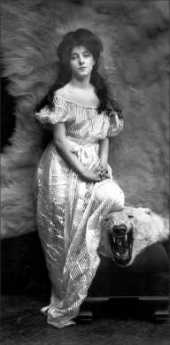
A Girl Cut in Half is Claude Chabrol's modern-day version of the Evelyn Nesbit story. Evelyn who? Her story has been told on screen in The Girl in the Red Velvet Swing (with Joan Collins) and Ragtime (with Elizabeth McGovern earning an Oscar nomination). In a nutshell, in 1906, Nesbit was a model who became something of a celebrity because of her affair with architect Stanford White who was shot to death by Nesbit's unstable husband Harry K. Thaw. When Thaw's case hit the courts it was dubbed "the murder of the century" -- this was eighty-something years before O.J. Simpson.
Chabrol and his co-scenarist Cecile Mastre utilized the outlines of the case to craft their plot. Gabrielle (Sagnier) is a local TV weathergirl on the rise. She soon catches the romantic attentions of two gents, Paul (Benoit Magimel), the wealthy scion of a family who owns a pharmaceutical firm, and the older successful novelist Charles (Francois Berleand).
Chabrol has often been compared with Hitchcock and Sagnier's character is a relative of the many cool, icy blondes that populated Hitchcock films. The audience isn't clued into the reasons why she dallies with these distinctive men, although there are hints that she may be seeking a father figure in the older writer, and, of course, there's the cliche that every woman is attracted to the "bad boy". In any case, this is a love triangle that will end in tragedy; getting there is the thrust of the film and it's a bumpy but satisfying ride.
Sagnier does what she can with a slightly underwritten role. Berleand is forceful and charming, while Magimel walks off with movie. There's fine support from Caroline Silhol as Paul's snobbish mother and Matilda May as Charles' publisher. It's all very Chabrolian, and if you are a fan of the director's work (as I am), then you'll like this movie, even if it is not top shelf.
Rating: B
In Un secret (A Secret), Sagnier has a pivotal supporting role. This is a film that is difficult to write about because one doesn't want to give away too much of the plot. It is based on an autobiographical novel by Philip Grimbert and centers on Francois, a character the audience meets at various stages in his life. He is seen as a child, a teenager and an adult, all played by different actors, and the plot revolves around his uncovering a long-buried family secret that is partly based on religion and partly on a more taboo issue. Sagnier is terrific in her role but the movie really centers on Francois' parents (Patrick Bruel and Cecile De France), although Julie Depardieu as a family friend (and keeper of the secret) delivers the best performance. Directed by Claude Miller.
Rating: B-
And in what is my favorite of this quartet, Les chansons d'amour (Love Songs), Sagnier again plays a pivotal role.
First off, this is not a remake of the 1986 Catherine Deneuve film that bore the same title in English -- although it does feature Deneuve's daughter Chiara Mastroianni.
This is a musical, directed by Christopher Honore, and set in contemporary Paris. As the film opens, Julie (Sagnier) and her lover Ismael (Louis Garrel) are experiencing troubles in their relationship. To spice things up, they enjoy the occasional threesome with Alice (Clotilde Hesme), Ismael's co-worker. Julie's family has embraced the young man, but her mother (Brigitte Rouan) is shocked when she learns of the arrangement. While Julie claims that she agreed to the arrangement to hold on to Ismael, she also confesses that there are aspects which she enjoys.
An unexpected tragedy occurs which forces the various lovers apart and into new arrangements. Ismael deals with conflicting emotions and eventually makes a suprising choice. Since the film is called "Love Songs" -- one can gather that it focuses on the healing powers of that emotion.
Did I mention that this is a musical? In fact, one of the better musicals I've seen in years. Yes, the actors aren't trained singers, but that's part of the film's charm. The fourteen songs in the movie, all written by Alex Beaupain, aren't all that memorable -- you don't hum them afterwards -- but in the context of the plot, they work quite well. The best number is a mournful lament delivered by Chiara Mastroianni.
Sagnier is terrific as the conflicted Julie. Hesme is fine as the pragmatic Alice. Gregoire Leprince-Ringuet offers fine support as a puppyish suitor and Alice Butaud as Julie's other sister also registers, as do Brigitte Rouan and Jean-Marie Winling as Julie's parents. Garrel anchors the film, deftly taking a somewhat selfish lout on a journey in which he opens up his heart.
I have seen Love Songs several times now and with each viewing I discover more to it, like re-reading a good novel. This is easily one of my favorite films of the last decade and ranks along with Once as a wonderful musical and a bittersweet romance.
Rating: A-
Saturday, December 12, 2009


Friday, December 11, 2009
December 11: Becoming Jane with Rachel Getting Married
When I challenged myself to try to write a review a day for the month of December, I didn't realize just how much of an effort it was going to be. I've certainly got newfound respect for people who operate blogs for profit (y'all know who you are). I suppose I could just post about anything (and I do and I have) but my goal was to try to write about the many films I've seen in the last month or so.
Two of the more recent items to cross my path were Becoming Jane and Rachel Getting Married, both starring Anne Hathaway. Of course, I first encountered this actress when she co-starred with Julie Andrews in The Princess Diaries, and I'd watched her attempts to shed her perky image (which she solidified in Ella Enchanted) by co-starring in Havoc and Brokeback Mountain. Of course sharing the screen with that goddess Meryl Streep in the middling The Devil Wears Prada only served to make her more appealing.
But portraying the British author Jane Austen in a speculative biography? I was a bit surprised that there weren't more cries against this from the folks across the pond -- but then, lately, that seems to be a mini-trend -- allowing non-British actress to portray iconic English writers (e.g., Renee Zellweger inMiss Potter or Nicole Kidman in The Hours).
Well, Hathaway falls more closely in the Zellweger camp; she tries mightily but fails to convince. Granted this film, written by Kevin Hood and Sarah Williams and directed by Julian Jarrold (who was responsible for the Cliff Notes version of Brideshead Revisited) plays more like a 18th-century episode of "Sex in the City". While it is purportedly based on letters from Austen to her sister Cassandra, the plot cobbles bits from her work in a vain effort to cash in on the Austen craze that ceaselessly continues despite hitting its high point in the mid-1990s . I have to give Jarrold credit, though for wisely surrounding Ms. Hathaway with a bevy of strong character actors including the redoubtable Maggie Smith, as wells as Julie Walters, James Cromwell and Ian Richardson. Perhaps the smartest move was casting up-and-comer James McAvoy as Austen’s roguish love interest.
The period details are there, but there’s a blazing hole in the center because McAvoy and Hathaway don’t generate any real heat. It’s a pity because there’s potential in the story but the writers didn’t trust enough to run with the idea; instead they chose to fall back on Austen’s work and undercut the endeavor. Instead of making something original, they opted for a pallid mashup of Austen’s novels.
Rating: C
Someday Hathaway will find a vehicle that takes full advantage of her abilities. For some critics, that was Rachel Getting Married, but for my money it wasn't. Although I knew the actress had earned an Academy Award nomination for her performance, I was expecting a bit more from the movie itself. Truthfully, I had tried to stay away from reading reviews until after I had seen the film, but once I did and disliked it intensely. I was shocked by how many critics raved about it. I don't know what they saw. (But then again I don't "get" why people love supposedly great TV comedies like "The Office" and "30 Rock".)
The premise of Rachel Getting Married is fraught with promise: Kym (Hathaway) is released from rehab just in time to return home in a tony Connecticut suburb for her sister's wedding. Being self-dramatic, Kym HAS to be the center of attention, all the while decrying the fact. She chafes under her overprotective father (Bill Irwin), barely acknowledges her stepmother Carol (Anne Deveare Smith) and knows exactly how to push the buttons of her sister Rachel (Rosemary DeWitt).
The family doesn't exactly trust Kym and it takes a while before the audience is clued into why. Hathaway offers a detailed confession of her transgression in a monologue set at an A.A. meeting and undoubtedly it was that scene that landed her among the final five Best Actress nominees. Her characterization overall, though, proved that she was more than just a fluffy lightweight. In some ways, it called to mind Liza Minnelli's work in The Sterile Cuckoo. I mention this partly because I see something of resemblance in the two performers and if Hugh Jackman ever does The Boy From Oz as a movie, he should look no further than Hathaway to portray Minnelli.
The other performers vary from note perfect (DeWitt who captures the admixture of sibling love and rivalry) to hammy (Irwin who pushes too hard) to uneven (Debra Winger as the girls' icy mother whose confrontation scene with Hathaway fell flat instead of invoking chills). Much of the problem rests with Lumet's rambling, unfocused script -- the rehearsal dinner seemed to last for half the movie with guest after guest offering toasts to the happy couple. Who were those people? We don't know them? We don't care about them? We barely know the bride and the groom is really a cipher.
Jonathan Demme also has to share some of the blame, allowing scenes to go on far too long. It's meant to be atmospheric, but again, we aren't focused on the key players in this family drama and the peripheral characters are not developed and don't register.
There's a germ of a good story at the heart of this movie but it is not developed. Instead, we get Hathaway's diamond-like performance in a cheap and shabby setting.
Rating: C-
Thursday, December 10, 2009
December 10: The Duchess of Langeais
Several months ago I rented The Duchess of Langeais from Blockbuster (it was an exclusive to that outlet) and watched it. But I didn't write about it because at the time I wasn't making the time to write. I had health issues (a bad reaction to a prescribed medication), work was stressful and consuming, and while I enjoyed watching films, I really didn't feel like writing about them. I was burnt out after a decade on the job and need a bit of an extended vacation.
Well, the same film recently turned up on the Sundance Channel and I watched it again, because, frankly, I had enjoyed it a lot the first time. I also was particularly drawn to the film because of its French title Ne touchez pas la hache, or as it was known in the United Kingdom, Don't Touch the Axe.
Adapted from a Balzac novella by Pascal Bonitzer, Christine Laurent and director Jacques Rivette, The Duchess of Langeais opens with General Armand de Montriveau (the late Guillaume Depardieu in dashing mode), a military veteran of the Napoleonic wars, who makes a pilgrimage to a convent in Spain in order to speak with a Carmelite nun known as Sister Theresa (Jeanne Balibar, who also starred in the director's Va Savoir). After the interview, Theresa announces that she has lied to the Mother Superior -- the military office was not a relative but her lover -- and then the story flashes back several years.
Five years earlier, the pair had first met in Paris. At the time, she was Antoinette de Langeais and he was a celebrated military figure who had been wounded in battle in Africa. They share an immediate attraction, but societal pressures cause her to only play the coquette. Frustrated, Armand resorts to kidnapping the duchess and threatening her. But she continues to refuse to surrender herself entirely to him. He pulls away and she then recognizes how much she loves him. There's a failed rendez-vous that leads them to the Spanish convent and the film's tragic denouement.
The Duchess of Langeais falls nicely in with much of Rivette's work, embracing themes of enslavement and escape. The movie's logline could read something along the lines of Beauty and the Beast meets Les Liaisons Dangereuses. There's romance but the relationship takes on a decidedly martial tone. Antoinette enjoys being a flirt and a tease, but she pushes too far and Armand resorts to what he knows best, battlefield strategy. She becomes an object to defeat in order to possess and that leads to the multi-year separation which in turn leads to tragedy.
The cast is superb with Balibar appropriately mercurial and sensual while Depardieu delivers a memorable performance as the man who lashes out at that which he cannot have. There's also strong support by veteran actors Bulle Ogier and Michel Piccoli (the co-stars of Belle Toujours) who proffer advice to the duchess on how to handle her affairs.
Watching the film now, though, there is a poignance to Depardieu's work. He had lost a leg to an infection following a motorcycle accident, so he employs that in his characterization of this wounded general. Now, following his surprising death from pneumonia, watching his work invokes the same sort of feelings that seeing any performer gone too soon (e.g., James Dean, Heath Ledger), the prospect of what might have been. For many years, Depardieu acted in the shadow of his famous father, but along the way, he came into his own and was establishing himself as a strong screen presence. This film is one that serves as a testament to his abilities. Rent it or seek it out on Sundance.
Rating: A-
Well, the same film recently turned up on the Sundance Channel and I watched it again, because, frankly, I had enjoyed it a lot the first time. I also was particularly drawn to the film because of its French title Ne touchez pas la hache, or as it was known in the United Kingdom, Don't Touch the Axe.
Adapted from a Balzac novella by Pascal Bonitzer, Christine Laurent and director Jacques Rivette, The Duchess of Langeais opens with General Armand de Montriveau (the late Guillaume Depardieu in dashing mode), a military veteran of the Napoleonic wars, who makes a pilgrimage to a convent in Spain in order to speak with a Carmelite nun known as Sister Theresa (Jeanne Balibar, who also starred in the director's Va Savoir). After the interview, Theresa announces that she has lied to the Mother Superior -- the military office was not a relative but her lover -- and then the story flashes back several years.
Five years earlier, the pair had first met in Paris. At the time, she was Antoinette de Langeais and he was a celebrated military figure who had been wounded in battle in Africa. They share an immediate attraction, but societal pressures cause her to only play the coquette. Frustrated, Armand resorts to kidnapping the duchess and threatening her. But she continues to refuse to surrender herself entirely to him. He pulls away and she then recognizes how much she loves him. There's a failed rendez-vous that leads them to the Spanish convent and the film's tragic denouement.
The Duchess of Langeais falls nicely in with much of Rivette's work, embracing themes of enslavement and escape. The movie's logline could read something along the lines of Beauty and the Beast meets Les Liaisons Dangereuses. There's romance but the relationship takes on a decidedly martial tone. Antoinette enjoys being a flirt and a tease, but she pushes too far and Armand resorts to what he knows best, battlefield strategy. She becomes an object to defeat in order to possess and that leads to the multi-year separation which in turn leads to tragedy.
The cast is superb with Balibar appropriately mercurial and sensual while Depardieu delivers a memorable performance as the man who lashes out at that which he cannot have. There's also strong support by veteran actors Bulle Ogier and Michel Piccoli (the co-stars of Belle Toujours) who proffer advice to the duchess on how to handle her affairs.
Watching the film now, though, there is a poignance to Depardieu's work. He had lost a leg to an infection following a motorcycle accident, so he employs that in his characterization of this wounded general. Now, following his surprising death from pneumonia, watching his work invokes the same sort of feelings that seeing any performer gone too soon (e.g., James Dean, Heath Ledger), the prospect of what might have been. For many years, Depardieu acted in the shadow of his famous father, but along the way, he came into his own and was establishing himself as a strong screen presence. This film is one that serves as a testament to his abilities. Rent it or seek it out on Sundance.
Rating: A-
Wednesday, December 9, 2009
December 9: Hotel Gramercy Park
Back when we both lived in Manhattan, my pal Beverly and I used to take walks through the city and one area we invariable ended up visiting was Gramercy Park. Bev used to say that her dream was to end up living in an apartment at the Gramercy Park Hotel. Now in the 1990s, the hotel had seen better days, but there was still a sort of shabby chic vibe. After all, this was a place with history. Built in 1925, the hotel had a checkered but somewhat illustrious history.
In 1926, Humphrey Bogart and his first wife Helen Menken were married there. A family from Massachusetts with the surname Kennedy once lived there on an entire floor. Babe Ruth patronized its bar, while literary giants Edmund Wilson and Mary McCarthy lived there.
By 1958, the hotel was sold to Herbert Weissberg and under his ownership, the hotel became noted for its bohemian appeal. Musical performers ranging from Bob Dylan to Bob Marley to Debbie Harry to David Bowie were among those who graced the halls. Things went along until the 1990s when tensions within the Weissberger family eventually led to the sale of the hotel to Ian Schrager. Schrager overhauled the hotel, giving it a facelift, upgrading its decor and generally bringing it into the 21st Century.
Director Douglas Keeve (who made the wonderful portrait of Isaac Mizrahi entitled Unzipped) was fortunately asked by a local resident of the Gramercy Park area to document the changes to the building, inside and out. Thus was born Hotel Gramercy Park, his delightful, quintiessentially New York film.
Lately, I've been very nostalgic for the Manhattan in which I lived and this movie helped me capture a small part of a time that has passed and an era which is gone. Keeve was fortunate to be granted access to the surviving members of the Weissberg family, several longtime residents of the hotel (who refused to vacate during its renovations), and to Ian Schrager.
What emerges is a portrait that is heartbreakingly sad (there was much tragedy in the Weissberg family, from the overdose of one scion to the suicide of Herbert's son David, who had battled drug addiction in the past), eccentic (mostly the oddball residents of the hotel, including Tony-nominated lyricist Ira Gasman whose lovely tune "Everything I Want Is in Manhattan" becomes almost his defiant anthem), and determined (Schrager and his vision of what the hotel should be, replete with art work from his private collection as well as provided by Julian Schnabel). The various strands of the tale wend together to create an unforgettable movie.
The upshot is that a quaint downtrodden hotel with history was given a multi-million dollar face lift and has emerged as a trendy spot. It's the way of life in Manhattan, where history is paved over to be forgotten, except by filmmakers like Douglas Keeve, who function like archeologists, digging out those wonderful historic gems.
Rating: B+
In 1926, Humphrey Bogart and his first wife Helen Menken were married there. A family from Massachusetts with the surname Kennedy once lived there on an entire floor. Babe Ruth patronized its bar, while literary giants Edmund Wilson and Mary McCarthy lived there.
By 1958, the hotel was sold to Herbert Weissberg and under his ownership, the hotel became noted for its bohemian appeal. Musical performers ranging from Bob Dylan to Bob Marley to Debbie Harry to David Bowie were among those who graced the halls. Things went along until the 1990s when tensions within the Weissberger family eventually led to the sale of the hotel to Ian Schrager. Schrager overhauled the hotel, giving it a facelift, upgrading its decor and generally bringing it into the 21st Century.
Director Douglas Keeve (who made the wonderful portrait of Isaac Mizrahi entitled Unzipped) was fortunately asked by a local resident of the Gramercy Park area to document the changes to the building, inside and out. Thus was born Hotel Gramercy Park, his delightful, quintiessentially New York film.
Lately, I've been very nostalgic for the Manhattan in which I lived and this movie helped me capture a small part of a time that has passed and an era which is gone. Keeve was fortunate to be granted access to the surviving members of the Weissberg family, several longtime residents of the hotel (who refused to vacate during its renovations), and to Ian Schrager.
What emerges is a portrait that is heartbreakingly sad (there was much tragedy in the Weissberg family, from the overdose of one scion to the suicide of Herbert's son David, who had battled drug addiction in the past), eccentic (mostly the oddball residents of the hotel, including Tony-nominated lyricist Ira Gasman whose lovely tune "Everything I Want Is in Manhattan" becomes almost his defiant anthem), and determined (Schrager and his vision of what the hotel should be, replete with art work from his private collection as well as provided by Julian Schnabel). The various strands of the tale wend together to create an unforgettable movie.
The upshot is that a quaint downtrodden hotel with history was given a multi-million dollar face lift and has emerged as a trendy spot. It's the way of life in Manhattan, where history is paved over to be forgotten, except by filmmakers like Douglas Keeve, who function like archeologists, digging out those wonderful historic gems.
Rating: B+
Tuesday, December 8, 2009
December 8: R.I.P. "As the World Turns"
Well the idiots at TeleNext, the subsidiary of Procter & Gamble, have done it. Along with the cowardly executives at CBS (and I even went to college with one of them, the vice president who predicted this over the summer and to whom I say "SHAME!"). They have cancelled the now longest-running daytime drama "As the World Turns" today. Happy F'ing Christmas!
Can you tell I'm a little upset (and I haven't even watched the show that much recently), but it remained one of my favorites. My grandmother watched this show along with "Guiding Light" and many others that had already gone off the air. I have flitted around and catch what I can -- hell, I ordered Soapnet when it still was pursuing its original mission of airing soap operas.
Okay, I get that the shows are somewhat expensive, but if one examines the history of the genre and sees how much money they have generated in the past -- how the news divisions benefited; how primetime shows benefited from the cash flow, my question is, couldn't you put a little back into the genre? Stand by them while they are undergoing a bit of an upheaval. Cancelling "Guiding Light" after 57 years and now "As the World Turns" after 54 says something. Since one of the executives who was responsible for this is at 52 years old, maybe we should cancel her contract because she's old and out of touch?
There are so many problems with the genre that I can see the whole thing disappearing in a couple of years. Yes, several enterprising actors are turning to the Internet and creating their own shows and perhaps that will be the wave of the future, but I maintain there is still a place for these "stories" if they are well told. Part of the problem is that the genre devours itself and rewards those who are lousy by passing them around. Imagine if a sport allowed that. A baseball pitcher who can't throw any more gets traded from the Yankees to the Red Sox to the White Sox. Would that even happen? Or a basketball player who is going blind goes from the Nicks to the Celtics to the Jazz? Nope. Not going to happen. But lousy writers go from one show to another -- or worse, stay with one soap and drive it into the ground. Nowadays, fan reactions mean nothing to the executives and to the producers and writers. And DO NOT GET ME STARTED ON THE NIELSEN RATINGS!
I've said this one hundred times before, even I'm getting sick of saying it, but the fact of the matter is that these all-important ratings do not take into account the various ways in which people now watch these shows. Nielsen ratings do not measure DVRs or TiVo. They don't count when someone goes to a network's website and watches an episode.
And when people compare today to the heady days of the 1980s, I want to scream. Yes, I grant you that you had terrific writers working then, especially the late Doug Marland who elevated "As the World Turns" to must-watch television with his stories -- a man who recognized telling tales that involved multiple generations. But you also had fewer choices as far as channels to watch. Cable television was still in its infancy and hadn't made the in-roads it had. Viewers were still pretty much watching the big three (or four, if you counted Fox) networks. Nowadays, there's so much competition for eyeballs.
I'm saddened too for the actors in the city of New York. After "As the World Turns" goes off the air, there will only be one soap left in Manhattan -- "One Life to Live" -- and there have already been rumblings that it is on the chopping block. New York has gotten to be an expensive place to live, yes, but the talent pool there is extraordinary and I'm sick and tired of people not giving the actors who appear on daytime their due. Yes, there are the occasional "hair models" (as Nelson Branco of TV Guide Canada has dubbed them) but there are also many stage trained performers who appear on these shows -- actors whose names may not mean much to people outside of a small group but people like Scott Holmes, Ilene Kristen, Larry Bryggman, Kathleen Widdoes, Ellen Parker, and so on. Actor's actors.
Clearly the networks are in panic. Look at how NBC has virtually surrendered their primetime lineup to the competition with the boneheaded move to put Jay Leno on every night at 10pm. Oprah Winfrey has announced she's leaving daytime in 2011. Daily talk shows fail fairly regularly (Bonnie Hunt being the latest victim). Game shows are back in vogue. Yeah, I want to sit around and watch something I never watched when I was younger. "Price Is Right"? Who cares? "Password"? That died when Allen Ludden did. "Let's Make a Deal"? Sure. I want my daytime dramas back.
I know I'm just venting but I've met people who worked in this industry and it really pains me to see them treated so poorly by short-sighted executives. It won't change anything. But I do know that I will not be buying any more Procter & Gamble products. It's won't save the show or bring it back but it will at least bring me some slight satisfaction.
Can you tell I'm a little upset (and I haven't even watched the show that much recently), but it remained one of my favorites. My grandmother watched this show along with "Guiding Light" and many others that had already gone off the air. I have flitted around and catch what I can -- hell, I ordered Soapnet when it still was pursuing its original mission of airing soap operas.
Okay, I get that the shows are somewhat expensive, but if one examines the history of the genre and sees how much money they have generated in the past -- how the news divisions benefited; how primetime shows benefited from the cash flow, my question is, couldn't you put a little back into the genre? Stand by them while they are undergoing a bit of an upheaval. Cancelling "Guiding Light" after 57 years and now "As the World Turns" after 54 says something. Since one of the executives who was responsible for this is at 52 years old, maybe we should cancel her contract because she's old and out of touch?
There are so many problems with the genre that I can see the whole thing disappearing in a couple of years. Yes, several enterprising actors are turning to the Internet and creating their own shows and perhaps that will be the wave of the future, but I maintain there is still a place for these "stories" if they are well told. Part of the problem is that the genre devours itself and rewards those who are lousy by passing them around. Imagine if a sport allowed that. A baseball pitcher who can't throw any more gets traded from the Yankees to the Red Sox to the White Sox. Would that even happen? Or a basketball player who is going blind goes from the Nicks to the Celtics to the Jazz? Nope. Not going to happen. But lousy writers go from one show to another -- or worse, stay with one soap and drive it into the ground. Nowadays, fan reactions mean nothing to the executives and to the producers and writers. And DO NOT GET ME STARTED ON THE NIELSEN RATINGS!
I've said this one hundred times before, even I'm getting sick of saying it, but the fact of the matter is that these all-important ratings do not take into account the various ways in which people now watch these shows. Nielsen ratings do not measure DVRs or TiVo. They don't count when someone goes to a network's website and watches an episode.
And when people compare today to the heady days of the 1980s, I want to scream. Yes, I grant you that you had terrific writers working then, especially the late Doug Marland who elevated "As the World Turns" to must-watch television with his stories -- a man who recognized telling tales that involved multiple generations. But you also had fewer choices as far as channels to watch. Cable television was still in its infancy and hadn't made the in-roads it had. Viewers were still pretty much watching the big three (or four, if you counted Fox) networks. Nowadays, there's so much competition for eyeballs.
I'm saddened too for the actors in the city of New York. After "As the World Turns" goes off the air, there will only be one soap left in Manhattan -- "One Life to Live" -- and there have already been rumblings that it is on the chopping block. New York has gotten to be an expensive place to live, yes, but the talent pool there is extraordinary and I'm sick and tired of people not giving the actors who appear on daytime their due. Yes, there are the occasional "hair models" (as Nelson Branco of TV Guide Canada has dubbed them) but there are also many stage trained performers who appear on these shows -- actors whose names may not mean much to people outside of a small group but people like Scott Holmes, Ilene Kristen, Larry Bryggman, Kathleen Widdoes, Ellen Parker, and so on. Actor's actors.
Clearly the networks are in panic. Look at how NBC has virtually surrendered their primetime lineup to the competition with the boneheaded move to put Jay Leno on every night at 10pm. Oprah Winfrey has announced she's leaving daytime in 2011. Daily talk shows fail fairly regularly (Bonnie Hunt being the latest victim). Game shows are back in vogue. Yeah, I want to sit around and watch something I never watched when I was younger. "Price Is Right"? Who cares? "Password"? That died when Allen Ludden did. "Let's Make a Deal"? Sure. I want my daytime dramas back.
I know I'm just venting but I've met people who worked in this industry and it really pains me to see them treated so poorly by short-sighted executives. It won't change anything. But I do know that I will not be buying any more Procter & Gamble products. It's won't save the show or bring it back but it will at least bring me some slight satisfaction.
Tuesday: December 8
Oftentimes I'm asked which actors and actresses I enjoy watching in movies. When I answer, most people have no idea about whom I'm speaking because I tend to shy away from the usual suspects and my choices such as Roman Duris, Louis Garrel, Vincent Cassel, Monica Belluci, Romola Garai, etc. usually draw blank stares. Among American performers who fall into this category is Gabriel Macht. I first became aware of him after his guest appearance on "Sex and the City" but I really became a fan of his in earnest in 2001 after seeing him in both American Outlaws and Behind Enemy Lines. Over the next several years, I watched him in supporting roles in great movies (The Good Shepherd), good movies (A Love Song for Bobby Long) and middling ones (The Recruit). He was the best thing in the romantic comedy Because I Said So (which depending on one's point of view is either a good thing or not). So when I read that he finally had landed a leading role in a movie I was excited. Then The Spirit opened, got terrible reviews, and bombed big time at the box office. Still, it was directed by Frank Miller and I had admired his contributions to Sin City, so I kept thinking "how bad could this movie be?" Besides, a lot of the time, I find myself enamored of a movie that other critics have disliked.
So I rented the DVD of The Spirit, popped it in and ... As the film opened, I was admiring of the decor and the look of the movie. But then, well, it became clear that Frank Miller without Robert Rodriguez was like oil without vinegar in a salad dressing.
In the comics created by Will Eisner, the character of Denny Colt becomes the Spirit after being shot and left in a kind of limbo -- not really dead, but not really alive either. The original ran for a dozen years between 1940 and 1952 but in 2007, DC Comics resurrected the character and someone must have hit on the idea that making a movie would be a good thing. Trouble is that Miller's screenplay doesn't exactly contemporize the character or his story. Instead, Miller treats the material like a 1940s melodrama cum film noir. As a director, he's clearly lacking the skill set to deal with actors, while as a visual artist, he crafts some attractive-looking sequences.
The performers are all at sea, performing as if different films. Macht, who can be charming and heroic, comes across as merely dull. Samuel L. Jackson overplays and hams it up as the villain known as the Octopuss -- and his campy performance makes some of the TV actors from the old "Batman" show look as if they were doing Shakespeare. The femme fatales, including Eva Mendes, Scarlett Johansson, and Jamie King, are all defeated by the material.
I went into watching this movie with the expectations that I would find something in it that I could appreciate, but I was wrong. The movie isn't the worst I've ever seen, but it is pretty close.
Rating: D-
So I rented the DVD of The Spirit, popped it in and ... As the film opened, I was admiring of the decor and the look of the movie. But then, well, it became clear that Frank Miller without Robert Rodriguez was like oil without vinegar in a salad dressing.
In the comics created by Will Eisner, the character of Denny Colt becomes the Spirit after being shot and left in a kind of limbo -- not really dead, but not really alive either. The original ran for a dozen years between 1940 and 1952 but in 2007, DC Comics resurrected the character and someone must have hit on the idea that making a movie would be a good thing. Trouble is that Miller's screenplay doesn't exactly contemporize the character or his story. Instead, Miller treats the material like a 1940s melodrama cum film noir. As a director, he's clearly lacking the skill set to deal with actors, while as a visual artist, he crafts some attractive-looking sequences.
The performers are all at sea, performing as if different films. Macht, who can be charming and heroic, comes across as merely dull. Samuel L. Jackson overplays and hams it up as the villain known as the Octopuss -- and his campy performance makes some of the TV actors from the old "Batman" show look as if they were doing Shakespeare. The femme fatales, including Eva Mendes, Scarlett Johansson, and Jamie King, are all defeated by the material.
I went into watching this movie with the expectations that I would find something in it that I could appreciate, but I was wrong. The movie isn't the worst I've ever seen, but it is pretty close.
Rating: D-
Sunday, December 6, 2009
December 7: Musical Monday
Back in June, I was in Manhattan, just after the Tony Awards, and managed to score a great seat to the award-winning revival of Hair. The show, which is admittedly more of a revue than an actual book musical, was performed by a cast with zeal and an infectious spirit that I don't think anyone left the theater except in a jolly good mood. I had seen the 1979 Milos Forman-directed film when it first was released (and rather enjoyed it then), but a later viewing left me cold. Maybe I was just in a mood that day or something because I happened to catch the film again on the MGMHD channel (had no idea this even existed -- when I upgraded, it was among the listings) the other night and was captivated by it.
Screenwriter Michael Weller takes a lot of liberties with the rather skimpy original plot but much of what he concocted makes sense. He also includes homages to the stage show, including the infamous nude scene that closes the first act (now a skinny dip in a pond in Central Park) and an acid trip that on stage sometimes seems twee and perhaps even a tad tedious -- but here is a reflection of Claude's inner feelings.
In the film's story, Claude (John Savage) is from Oklahoma, has just been drafted and heads to New York City for some fun before shipping out. He encounters a group of hippies, led by George Berger (Treat Williams), and he eventually falls into their "tribe" that includes the pregnant Jeannie (Annie Golden), Woof (Don Dacus) and African American Hud (Dorsey Wright). Along the way they cross paths with society girl Sheila (Beverly D'Angelo) who also abandons the tony suburbs and joins the group.
Weller manages to work into the script nearly all of the catchy songs that Galt McDermot and James Rado and Gerome Ragni wrote. Forman uses "Aquarius" to frame the film and from the opening shots in Central Park, one immediately wants to go on this ride of a movie. Twyla Tharp did the choreography and there's some terrific staging involving horses in that opening number that still can cause one to stop and go "how did they accomplish that?" She also does terrific work on the numbers "Black Boys" and "White Boys" which inject humor and touch of silliness to the project (and the scenes involving these numbers include Laurie Beechman, Michael Jeter and Nell Carter -- who all left us too soon -- as well as Charlayne Woodard and Ellen Foley).
Forman is to be commended because he hired actors who could sing (several had stage credits) rather than relying on movie star names with questionable abilities. Williams is a charismatic ringleader (see the "I Got Life" number where he disrupts a staid suburban dinner party) and emerges as the genuine star of the movie. He's matched well, though, by Savage, who takes what might have been a cliche and turns him into a real person. D'Angelo is terrific as the not as uptight as you might expect debutante, while Golden invest her character with heart.
But hands down, the most electrifying moments come from Cheryl Barnes when she sings "Easy To Be Hard" as an anthem full of pain and hurt. The woman has amazing screen presence and a voice that is unbelievable. Every time I hear her or see this sequence, I get goosebumps. Even the time I watched the film and wasn't into it, her scene just touched me immeasurably. She's gone on to pursue a singing career, but I wish someone would have cast her in at least another movie. (I can dream.) This song alone elevates the film to a different level.
The film's ending (which I won't detail for anyone unfamiliar with the material) hits a bull's-eye and catches one short. It makes one angry, sad and respectful without succumbing to pathos.
When Hair was first released in 1979, it wasn't a box-office success, perhaps because film audiences were only open to dramatic fare about Vietnam. The previous year, The Deer Hunter and Coming Home had dominated the Academy Awards and Platoon and Full Metal Jacket were yet to be. Musicals weren't in vogue at the time, despite the yeoman work of Forman and his cast and crew. Over time, some have come to appreciate the film as among the director's better efforts. Now, more than 40 years after the original premiered on stage, and 30 years since the movie opened in theaters, it seems ripe for re-exploring. Try to catch it when it runs on cable or rent or buy the DVD. It's worth it.
Rating: B+
Screenwriter Michael Weller takes a lot of liberties with the rather skimpy original plot but much of what he concocted makes sense. He also includes homages to the stage show, including the infamous nude scene that closes the first act (now a skinny dip in a pond in Central Park) and an acid trip that on stage sometimes seems twee and perhaps even a tad tedious -- but here is a reflection of Claude's inner feelings.
In the film's story, Claude (John Savage) is from Oklahoma, has just been drafted and heads to New York City for some fun before shipping out. He encounters a group of hippies, led by George Berger (Treat Williams), and he eventually falls into their "tribe" that includes the pregnant Jeannie (Annie Golden), Woof (Don Dacus) and African American Hud (Dorsey Wright). Along the way they cross paths with society girl Sheila (Beverly D'Angelo) who also abandons the tony suburbs and joins the group.
Weller manages to work into the script nearly all of the catchy songs that Galt McDermot and James Rado and Gerome Ragni wrote. Forman uses "Aquarius" to frame the film and from the opening shots in Central Park, one immediately wants to go on this ride of a movie. Twyla Tharp did the choreography and there's some terrific staging involving horses in that opening number that still can cause one to stop and go "how did they accomplish that?" She also does terrific work on the numbers "Black Boys" and "White Boys" which inject humor and touch of silliness to the project (and the scenes involving these numbers include Laurie Beechman, Michael Jeter and Nell Carter -- who all left us too soon -- as well as Charlayne Woodard and Ellen Foley).
Forman is to be commended because he hired actors who could sing (several had stage credits) rather than relying on movie star names with questionable abilities. Williams is a charismatic ringleader (see the "I Got Life" number where he disrupts a staid suburban dinner party) and emerges as the genuine star of the movie. He's matched well, though, by Savage, who takes what might have been a cliche and turns him into a real person. D'Angelo is terrific as the not as uptight as you might expect debutante, while Golden invest her character with heart.
But hands down, the most electrifying moments come from Cheryl Barnes when she sings "Easy To Be Hard" as an anthem full of pain and hurt. The woman has amazing screen presence and a voice that is unbelievable. Every time I hear her or see this sequence, I get goosebumps. Even the time I watched the film and wasn't into it, her scene just touched me immeasurably. She's gone on to pursue a singing career, but I wish someone would have cast her in at least another movie. (I can dream.) This song alone elevates the film to a different level.
The film's ending (which I won't detail for anyone unfamiliar with the material) hits a bull's-eye and catches one short. It makes one angry, sad and respectful without succumbing to pathos.
When Hair was first released in 1979, it wasn't a box-office success, perhaps because film audiences were only open to dramatic fare about Vietnam. The previous year, The Deer Hunter and Coming Home had dominated the Academy Awards and Platoon and Full Metal Jacket were yet to be. Musicals weren't in vogue at the time, despite the yeoman work of Forman and his cast and crew. Over time, some have come to appreciate the film as among the director's better efforts. Now, more than 40 years after the original premiered on stage, and 30 years since the movie opened in theaters, it seems ripe for re-exploring. Try to catch it when it runs on cable or rent or buy the DVD. It's worth it.
Rating: B+
December 6: Golden Oldie
One of my all-time favorite actresses is Bette Davis. I cannot really articulate why, but I find her to be an intriguing and fascinating screen presence. Perhaps because she was willing to take risks and play characters that might be unlikable. Perhaps because she was more versatile than many realize. Perhaps because she just happened to be a damned good actress. I got to work with the producers of one of her TV-movies as they were preparing the opening credits and wanted various photographs of her through the years. And then, I actually got to meet the woman herself -- which remains a very special moment in my life.
So, thanks to the good folks at Green Cine, I scored a copy of Old Acquaintance, a woman's picture from 1943. I had seen the movie a long time ago but I wanted to watch it again.
Old Acquaintance is an adaptation of a play by John Van Druten (who received co-writing credit with Lenore Coffee on the screenplay) and centers on the life-long friendship between Katherine 'Kit' Marlowe (Davis) and Mildred 'Millie' Watson Drake (Miriam Hopkins). When the film opens, it's 1924 and Kit Marlowe has just published her first novel. Millie is to host her visit and has everything all planned out -- and, of course, nothing goes as expected. It becomes clear that Millie is spoiled, petulant and somewhat jealous of Kit's success, while Kit envies Millie's domestic life with her husband Preston (John Loder). Millie shows Kit a manuscript for a novel that she has written and before you know it, the years pass and Mrs. Drake has become a successful writer of pulp romances. Meanwhile, Kit's work comes slowly, wins awards, but sells few copies.
We skip ahead and Kit is trying her hand at playwriting while Millie is spending money wildly, neglecting her daughter and her husband. Preston makes it clear that he cares for Kit who declines his offer so as not to offend her friend.
Another jump in time and the U.S.A. has entered World War II. Kit has acquired a younger lover (Gig Young) who helps her arrange a meeting between Preston (now a major in the army) and his now-grown daughter (Dolores Moran).
Over the course of the film, marriages break up, lovers come and go, but the one constant is the friendship between the two women. Of course, one of the themes of the film is that a woman can have a career or a family but not both. (Something that Davis herself struggled with off-screen.)
Hopkins has the flashier role and her histrionics are mildly amusing. The character is meant to be somewhat annoying and the actress perfectly captures that. Davis has the more subdued role and she excels in the part. Her role allows her to play the martyr and suffer nobly. Much has been written about the women's real-life dislike of one another and there's a famous scene where Davis literally shakes Hopkins in an effort to knock sense into her. It's capped by a clipped and amusing "Sorry!" But while that may be the sequence everyone knows, the overall movie is terrific.
The supporting cast is fine. Young, in one of his first roles, acquits himself well. Moran is fine while character players Anne Revere (as a bitchy journalist) and Esther Dale (as Davis' maid) do sterling work.
The DVD transfer is pristine, maintaining the terrific black and white photography. The extras include commentary by director Vincent Sherman and Davis biographer Boze Hadleigh, a Warner Bros. cartoon, a short Stars on Horseback, and a featurette Old Acquaintance: A Classic Woman's Picture, which has commentary by Jeanine Basinger, Hadleigh, and others.
The movie was remade in 1981 by director George Cukor as Rich and Famous, and at the time of this writing Cameron Diaz is attempting to do a contemporary spin on the material.
Rating: B+
So, thanks to the good folks at Green Cine, I scored a copy of Old Acquaintance, a woman's picture from 1943. I had seen the movie a long time ago but I wanted to watch it again.
Old Acquaintance is an adaptation of a play by John Van Druten (who received co-writing credit with Lenore Coffee on the screenplay) and centers on the life-long friendship between Katherine 'Kit' Marlowe (Davis) and Mildred 'Millie' Watson Drake (Miriam Hopkins). When the film opens, it's 1924 and Kit Marlowe has just published her first novel. Millie is to host her visit and has everything all planned out -- and, of course, nothing goes as expected. It becomes clear that Millie is spoiled, petulant and somewhat jealous of Kit's success, while Kit envies Millie's domestic life with her husband Preston (John Loder). Millie shows Kit a manuscript for a novel that she has written and before you know it, the years pass and Mrs. Drake has become a successful writer of pulp romances. Meanwhile, Kit's work comes slowly, wins awards, but sells few copies.
We skip ahead and Kit is trying her hand at playwriting while Millie is spending money wildly, neglecting her daughter and her husband. Preston makes it clear that he cares for Kit who declines his offer so as not to offend her friend.
Another jump in time and the U.S.A. has entered World War II. Kit has acquired a younger lover (Gig Young) who helps her arrange a meeting between Preston (now a major in the army) and his now-grown daughter (Dolores Moran).
Over the course of the film, marriages break up, lovers come and go, but the one constant is the friendship between the two women. Of course, one of the themes of the film is that a woman can have a career or a family but not both. (Something that Davis herself struggled with off-screen.)
Hopkins has the flashier role and her histrionics are mildly amusing. The character is meant to be somewhat annoying and the actress perfectly captures that. Davis has the more subdued role and she excels in the part. Her role allows her to play the martyr and suffer nobly. Much has been written about the women's real-life dislike of one another and there's a famous scene where Davis literally shakes Hopkins in an effort to knock sense into her. It's capped by a clipped and amusing "Sorry!" But while that may be the sequence everyone knows, the overall movie is terrific.
The supporting cast is fine. Young, in one of his first roles, acquits himself well. Moran is fine while character players Anne Revere (as a bitchy journalist) and Esther Dale (as Davis' maid) do sterling work.
The DVD transfer is pristine, maintaining the terrific black and white photography. The extras include commentary by director Vincent Sherman and Davis biographer Boze Hadleigh, a Warner Bros. cartoon, a short Stars on Horseback, and a featurette Old Acquaintance: A Classic Woman's Picture, which has commentary by Jeanine Basinger, Hadleigh, and others.
The movie was remade in 1981 by director George Cukor as Rich and Famous, and at the time of this writing Cameron Diaz is attempting to do a contemporary spin on the material.
Rating: B+
Subscribe to:
Posts (Atom)